

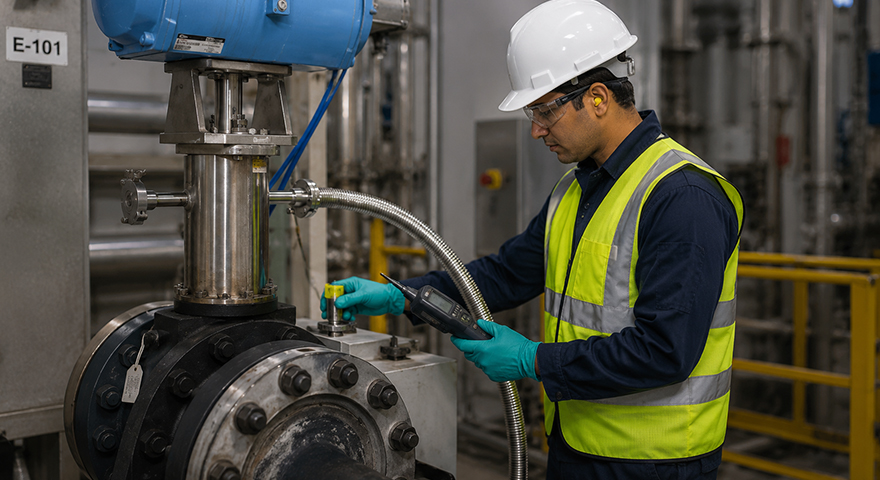
Fugitive Emission Testing
Not all industrial pollution comes out of a chimney. A lot of it escapes quietly, through leaking pipes, loose valves, open storage tanks and worn-out seals. These uncontrolled releases are called fugitive emissions, and because they do not pass through a stack or vent, they often go unnoticed until they cause a bigger problem.
Sawen Group is a QCI and NABL accredited environmental laboratory based in Lucknow. We test and monitor fugitive emissions from factories, chemical plants, storage facilities and processing units to help you identify leaks early and stay compliant with pollution control norms.
If your facility handles chemicals, gases or industrial materials and you want to check for uncontrolled emissions, our team can guide you through the entire testing process.
What is Fugitive Emission Testing?
Fugitive emission testing means checking a facility for pollutants that escape into the air from sources other than a proper chimney or exhaust vent. These emissions usually come from equipment leaks, storage tanks, pipelines, valves, pumps and material handling areas.
Since fugitive emissions do not have a fixed exit point like a stack, they are harder to detect without proper testing equipment. This kind of testing uses specialised instruments to scan a facility, identify leak points, and measure the concentration of pollutants escaping into the surrounding air.
Fugitive emission testing is done for:
- Chemical and petrochemical plants
- Oil and gas storage and handling facilities
- Manufacturing units using volatile chemicals
- Pharmaceutical production units
- Refineries and processing plants
- Any facility with pipelines, valves, tanks or pumps handling hazardous substances
Key Parameters Checked in Fugitive Emission Testing
| Parameter | What It Tells You? |
|
Volatile Organic Compounds (VOCs) |
Chemical vapours escaping from leaks or storage |
|
Methane and Hydrocarbons |
Common in oil, gas and chemical handling facilities |
|
Total Fugitive Dust |
Particulate matter escaping from material handling areas |
|
Ammonia and Sulphur Compounds |
Present in certain chemical and industrial processes |
|
Leak Concentration at Source Points |
Measures how much pollutant is escaping at each identified leak |
|
Ambient Concentration Near Leak Zones |
Shows how far pollutants spread from the source |
Why Choose Sawen Group for Fugitive Emission Testing?
- NABL and QCI accredited laboratory with certification number T-2091
- More than two decades of experience in environmental consultancy since 1998
- In-house testing facility, ensuring accurate and timely analysis
- Experienced technical team trained in leak detection and emission measurement
- Complete support, from testing to corrective action guidance
- Trusted by government bodies and private companies, including names like ISRO, Adani, AAI and REC
- Based in Lucknow, with service reach across Uttar Pradesh and other states
How to Book Fugitive Emission Testing?
- Call us at +91 7379444475 or WhatsApp us at +91 7379444471
- Or email your requirement to consultancy.sawens@gmail.com
- Or fill in the Request for Proposal form on our website with your details and requirement
- Our team will contact you to schedule a facility survey and share the cost and timeline
Get Your Fugitive Emission Testing Quote Today.
OUR FAQ
Frequently Asked Questions